


There’s a recurring debate in ecommerce and product teams:
Should we hire a U.S. developer or an international developer?
Behind that question is usually one assumption: the work will be better if it’s done in the U.S. In 2026, that assumption is outdated. The real differences are usually cost structure, process, and how well the team proves quality.
If you’re hiring for Shopify, MoonImpact supports international DTC brands with theme development, custom sections, migrations, and headless Shopify builds.
Coding isn’t regional. It’s universal.
There isn’t “Vietnam coding” and “U.S. coding.” There’s:
- clean architecture vs messy architecture
- maintainable code vs fragile code
- predictable delivery vs chaos
- good communication vs bad communication
- ownership vs just finishing the ticket
The tools are the same: JavaScript, Liquid, TypeScript, React, APIs, performance standards, version control. And in most serious teams today, English is the operating language for tickets, docs, and async updates.
Why geography still changes the price
Not because the code changes by region, but because the cost structure changes.
A U.S.-based developer or agency often carries:
- higher cost of living and operating costs
- higher taxes and business overhead
- higher local market rates
- more layers in delivery teams (sales, PM, account management)
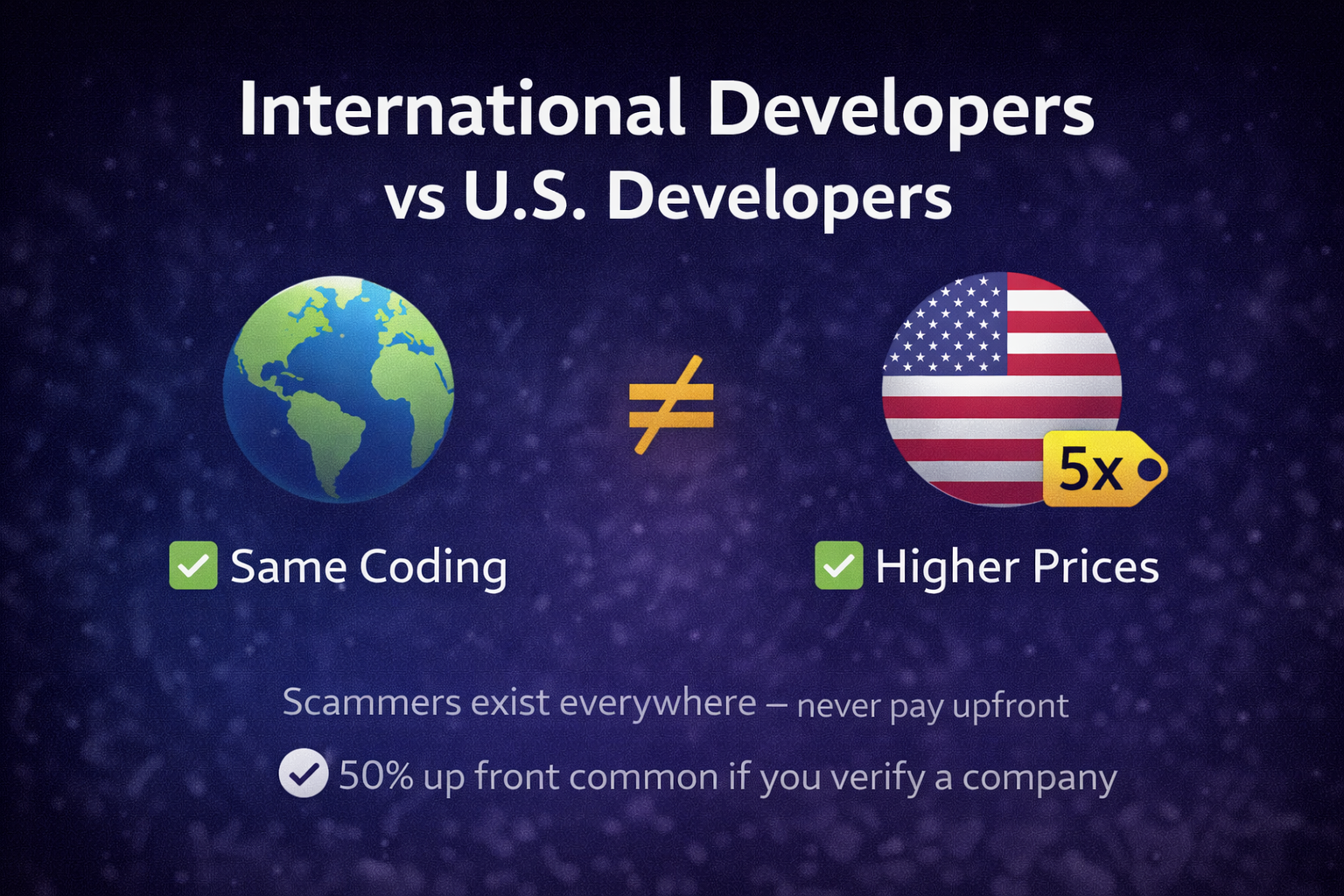
This is why it’s common to see pricing that is up to 5x higher in the U.S. compared to parts of Europe or Asia, even when the deliverables are similar.
Important: price does not automatically equal quality. It often reflects overhead and market expectations more than code output.
What actually predicts quality (regardless of country)
1) Proof of work
- portfolio with real outcomes
- before and after improvements in performance or conversion
- clear explanation of tradeoffs
- clean, structured deliverables
2) System thinking
Strong developers build systems, not one-off hacks. In Shopify that means maintainable theme architecture, reusable sections, predictable patterns, and performance-aware decisions.
3) Communication
- clear written updates
- accurate requirements confirmation
- early identification of risks
- scope control and decision-making
4) Process and reliability
- milestones and timelines that make sense
- staging and QA workflow
- documentation and handoff
- post-launch support plan
Time zones: the only real location advantage
Location matters in one practical way: working hour overlap.
- If you need live calls every day, same-region teams can feel easier.
- If you work well async, international teams can be just as fast or faster.
Many great international teams operate with a small overlap window, clear async updates, and a tight feedback loop. That often beats “same timezone but poor communication.”
Scams exist everywhere. Country does not protect you.
One critical point: scammers are everywhere. Not in one country, not in one region. You can get burned by a local agency just as easily as a remote freelancer.
Here’s how to reduce risk:
- Verify the company: real business registration, real team, real portfolio, real client references.
- Do a paid discovery or a small paid milestone first.
- Never pay 100% upfront for custom development.
- Use milestone-based payments tied to deliverables.
In custom services, a common approach is 50% upfront and 50% on delivery after you’ve verified the company and the scope. For larger projects, it’s often better to split into multiple milestones to keep both sides aligned.
Helpful external reading on fraud prevention (general): FTC guidance on avoiding scams.
The bottom line
The work can be equally good anywhere. The price is different because life and overhead costs are different. In 2026, the differentiator is not geography, it’s professionalism.
So instead of asking: Should we hire U.S. devs or international devs? ask:
- Who can deliver predictable outcomes?
- Who builds maintainable systems?
- Who communicates clearly and manages scope?
- Who can show proof of past work?
If you want a team that builds Shopify systems for international brands, start here: Contact MoonImpact.
FAQ
Does it matter if a developer is from Vietnam, the USA, or Europe?
It matters mostly for pricing and time zone overlap. Quality depends on proof of work, process, and communication, not the country.
Why can U.S. development cost up to 5x more?
Higher cost of living, higher business overhead, and local market rates often drive higher pricing, even when deliverables are similar.
Is the code quality the same everywhere?
Quality varies by person and process, not geography. Evaluate portfolios, documentation, and delivery workflow.
How do I avoid scams when hiring developers?
Verify the company, start with a smaller paid milestone, and avoid paying 100% upfront. Milestone-based payments are safer than full upfront payments.
Is 50% upfront normal?
For verified providers, 50% upfront and 50% on delivery is common for custom work. For larger projects, splitting into multiple milestones is usually safer for both sides.